Tuesday, December 14, 2021

The Afghan Debacle Should Prompt China to Revise its South Asian Policy

This piece was first published by RUSI in London.  The views do not represent those of RUSI.

EXPERT PERSPECTIVE — While China has tried to rebalance its relations between India and Pakistan before, recent developments in Afghanistan should give it fresh impetus to do so.  Any future Cold War between the United States and China would be entirely different to the previous version for several reasons of which the most obvious is the economic and financial inter-dependency between the two countries. However, one similarity could survive in the form of proxy conflicts such as those seen in Angola, Afghanistan and Nicaragua in the 1980s.

A proxy conflict in South Asia would be extremely dangerous both because of the numerous geopolitical fissures which opposing sides would seek to exploit and the fact that India and Pakistan now have nuclear weapons and the means of delivery. In the previous Cold War neither New Delhi nor Islamabad had credibly deployable nuclear weapons and, although India leant clearly towards the Soviet Union and Pakistan towards the West, there was no proxy war in the Subcontinent, only further north-west in Afghanistan.

Relations between India and Pakistan are already dangerous enough without being drawn into a new Cold War. The Balakot episode of 2019 took both countries to the brink of war and was de-escalated more through luck than good judgement. Since then, China has become an active participant through its hostile operations along its disputed border with India in the Himalayas and, most recently, by appearing to endorse Pakistan’s preference for a Taliban-only government in Afghanistan.

I am told confidentially that China did question the wisdom of Pakistan’s judgement in August just as the Ashraf Ghani government collapsed but, crucially, it did not press the point. Beijing may have calculated that the Pakistan army could not have forced the Taliban to form an inclusive administration and that the influential Corps Commanders in Pakistan might even have resisted Chinese pressure at such a seminal moment.

Following the US withdrawal, Beijing will surely now recognise that it needs its own policy on Afghanistan; it can no longer outsource decisions to Pakistan. There is too much at stake including the threat from Uighur militants, Chinese investments in the mining sector and possible future Belt and Road Initiative (BRI) projects.


The Cipher Brief hosts private briefings with the world’s most experienced national and global security experts.  Become a member today.


Beijing will also know that the Indian government is infuriated by its loss of agency in Afghanistan after 20 years of political and economic investment there. Following what looks (at first sight) like a stunning victory for Pakistan, India will inevitably wish to make Islamabad pay a price. New Delhi is not short of options. It will doubtless see opportunities in the growing dissent in Baluchistan (and Gwadar in particular) against the BRI, and in the increasing disenchantment amongst Pashtuns in Khyber Pakhtunkhwa (formerly North West Frontier Province) and in the huge port-city of Karachi where Pashtuns represent some 20% of the population. India will also push its maximalist position on Kashmir by which Gilgit-Baltistan (through which several BRI projects traverse) is claimed as part of India.

China may also reflect on the cost/benefit of its activity along India’s northern border. In the long run China has much to lose by stirring up a region which offers India (and potentially the United States) a direct route via the Aksai Chin into China’s two least contented regions; Tibet and Xinjiang. It could be argued that, in the new era of hybrid warfare and imaginative cyber operations, direct access to a territory is less essential for a campaign of disruption. Possibly.  But China would be wise not to throw stones in such an extensively glazed region.


Go beyond the headlines with expert perspectives on today’s news with The Cipher Brief’s Daily Open-Source Podcast.  Listen here or wherever you listen to podcasts.


All of this argues for China to review its South Asia strategy with a view to a degree of rebalancing between India and Pakistan. The continuation of existing policy will see Afghanistan decline back to its pre-2001 status as an economic and social wasteland. It could witness Pakistan increasingly undermined by radical Islamist groups operating from Afghanistan, the tribal borderlands and inside the cities of the Punjab and Sind. It will see a frustrated India taking ever less flexible positions on regional issues and on Chinese access to its huge markets. And access to Himalayan waters will become the dominant theme in the region.

It is often forgotten that China attempted to rebalance its relations between India and Pakistan in 1996 in a remarkable speech delivered on 2nd December by President Jiang Zemin in Islamabad.  After a number of standard paragraphs about the “profound friendship” between China and Pakistan, Jiang then turned to the importance of ‘South Asia’ to Beijing and then, to an increasingly appalled audience, began praising the “the multi-dimensional exchanges and cooperation between China and the various South Asian countries”. The name of India never passed his lips but it was clear to all that China intended to rebalance its Indian and Pakistani relationships.

To grasp the ambition behind the speech two passages are worth repeating; “China and South Asian countries are all members of the developing world dedicated… to developing their economies and improving their peoples’ livelihood. They all need a peaceful and stable international environment and, particularly, a favourable surrounding environment.”

And “China will, as always, support South Asian regional cooperation, support the proposal and initiative for the establishment of South Asia Nuclear Free Zone and Indian Ocean Zone of Peace, and support all efforts designed to serve peace, stability and development in the South Asian region.”

The Indian nuclear tests just 18 months later killed the rebalancing in its infancy but the sentiments are arguably truer today than in 1996. If Pakistan and Afghanistan are to survive they need to open their borders with India and become transit routes to Central Asia. Now that the US has departed the stage only China can facilitate such ambitions. The alternative is more terrorism and instability in an area where there are far too many nuclear weapons. Even without a new Cold War Beijing’s current course is too dangerous.

Read more expert-driven national security insights perspective and analysis in The Cipher Brief

The post The Afghan Debacle Should Prompt China to Revise its South Asian Policy appeared first on The Cipher Brief.


from The Cipher Brief https://ift.tt/3IRJsor
via IFTTT

Monday, December 13, 2021

The Supply Chain is the Perfect Asymmetric Target

Robert Hannigan is a Principal Member of The Cyber Initiatives Group, powered by The Cipher Brief.

EXPERT PERSPECTIVE — Asked recently what risk he worried about most, alongside Taiwan and Ukraine, Cipher Brief Expert, General Stanley McChrystal said it was cyber security, particularly in the supply chain.

General McChrystal is part of a growing group of the most senior operational and strategic US commanders that include former Chairman of the Joint Chiefs of Staff, Admiral Mike Mullen, in seeing the supply chain threat as existential. Unless the supply chain can be secured, the whole infrastructure on which Western economies rest, not to mention their military defences, will be compromised.

Two factors have brought the otherwise dry subject of supply chain security to the top of the political risk table. One has been the pandemic, in which we have become painfully aware of the fragility of supply chains and the over-dependence of Western countries on external providers, particularly in China. We have also realised how little we actually understand about our supply chains: which companies are in them, who owns them, who controls them and how they can be disrupted.

The other factor has been the SolarWinds attack, almost exactly a year ago. The sophistication of this compromise of the software supply chain, which had probably been active for at least a year before it was discovered, captured headlines around the world. This was partly because SolarWinds Orion was in use by a whole range of government agencies and major companies. More acutely than many other earlier third-party compromises, it illustrated why supply chain companies are such attractive targets: their security is often poor and they represent a softer way into a vast range of customers, including many companies that would in themselves be a hard target. The supply chain is the perfect asymmetric attack.


The Cipher Brief hosts private briefings with the world’s most experienced national and global security experts.  Become a member today.


Interest in this is leading to some positive focus.

There are two challenges. The first is visibility. Governments and companies need to understand what the security of their tens of thousands of vendors looks like in real time. That means having the same attitude to the ecosytem of third parties as they would to their own networks. It also means understanding ownership and control and a range of other dependencies. It requires constant monitoring of the supply chain, not occasional compliance exercises. In the end, this will probably need to be required by regulation, but there is no need to wait for that.


Go beyond the headlines with expert perspectives on today’s news with The Cipher Brief’s Daily Open-Source Podcast.  Listen here or wherever you listen to podcasts.


Beyond visibility and understanding there needs to be action. We have to move from assessing the risk and admiring the problem to fixing it. This means taking a range of actions from helping vendors to remediate weaknesses to addressing issues of ownership. The UK’s new legislation giving government greater powers to intervene in mergers and acquisitions on national security grounds is long overdue and brings it into line with other Western countries. But these assessment processes will need to become dynamic and constant to reflect the ever-shifting nature of modern vendor ecosystems.

The complexity of the global supply chain is the creation of open economies and democratic societies; but unless it is secured it will ultimately undermine them.

Read more expert-driven national security insights perspective and analysis in The Cipher Brief

The post The Supply Chain is the Perfect Asymmetric Target appeared first on The Cipher Brief.


from The Cipher Brief https://ift.tt/3DKkSSM
via IFTTT

Tuesday, December 7, 2021

The Urgency of the Moment for Congress on AI and National Security

(Editor’s Note: This article is the fifth and final article in a series first published by our friends at Just Security that is dives into the foundational barriers to the broad integration of AI in the IC – culture, budget, acquisition, risk, and oversight. This article considers a modified approach to congressional oversight of the IC. The author’s full report examining all of the topics in this series in greater depth is available here.)

Throughout this series, I have explored the most pressing foundational issues impacting the Intelligence Community’s (IC) ability to meet the urgency of this moment in the global artificial intelligence (AI) race. The current bipartisan support for taking bold action to drive national security use of AI is key to the IC’s success. That support must propel change in the priority areas I have already identified: modernizing the IC’s budget and acquisition processes and enabling a risk-tolerant culture with a new IC AI risk assessment framework that helps IC officers navigate the uncertainty that necessarily accompanies technological innovation. There is one other area, however, that cannot be ignored if the IC is to keep pace with our nation’s adversaries and provide policymakers with accurate, timely, and impactful insights: congressional oversight.

Congressional oversight of the IC is critical. Congress is the eyes and the ears of the American people. Among other things, it is charged with evaluating IC program performance, and ensuring the IC is efficiently and effectively spending taxpayer dollars and properly executing national security activities consistent with statutory requirements and legislative intent.

But intelligence oversight is complicated and has not sufficiently evolved with the times. When it comes to assessing progress of IC programs, standard oversight processes typically track defined, pre-determined requirements, cost, and timelines. These metrics have worked reasonably well for large programs like the acquisition of satellites and buildings, for which there is a clear beginning, middle, and end, with easily identifiable milestones and a definite budget. However, AI is different; its development moves back and forth across a spectrum of activities often without discrete steps, and failure is a necessary part of the process as the technology evolves and matures. Traditional metrics are, therefore, less effective for AI, as the value (or lack thereof) of certain milestones may only become clear partway through the development process and desired end-states may shift.

The IC has four primary congressional oversight committees. In addition to the House Permanent Select Committee on Intelligence (HPSCI) and the Senate Select Committee on Intelligence (SSCI), which have oversight jurisdiction over the IC, the House Appropriations Committee Defense Subcommittee (HAC-D) and the Senate Appropriations Committee Defense Subcommittee (SAC-D) provide the IC’s money. These four committees (hereinafter collectively “Committees”) must consider a more adaptive approach to oversight, measuring progress and failure through metrics that are less rigid and better tailored for AI and other emerging technologies. In doing so, the Committees may lose a measure of certainty that impacts their most powerful lever – fiscal control over the IC. For that reason, the Committees and the IC must simultaneously build a greater degree of trust, transparency, and ultimately partnership.

Adaptive Oversight

Much like AI itself, congressional oversight of AI activities must evolve and adapt to the world of emerging technology. While there are a variety of rules that govern Congress’ oversight responsibilities, Congress has considerable latitude and discretion in the execution of that oversight, including how they measure executive branch progress. To improve IC oversight engagements, Congress and the IC must start with a shared strategic vision for what a successful AI project looks like and create an approach to oversight that is tailored to achieve this goal.

Current measures and metrics often focus on ensuring projects stay on track in terms of cost and schedule; there are well-defined outputs, such as number of tools built, and static timelines for delivery. Such demonstrable deliverables are objective, consistent, and easy to measure, but they are ill-suited to AI, the underlying technology for which is still evolving. To take full advantage of AI’s emerging possibilities, the IC must have the ability to test, adjust, and pivot as new algorithms and capabilities are developed and applied to different problem sets.


The Cipher Brief hosts private briefings with the world’s most experienced national and global security experts.  Become a member today.


Recognizing that detailed requirements and program schedules are not well-suited to measuring the success of software, which is the core of AI, the Defense Department is already considering changes to related oversight. Research by Google and others indicates that metrics aligned with DevSecOps, the industry best practice for rapid, secure software development, can better predict the performance of software teams. DevSecOps seeks to unify software development (Dev), security (Sec), and operations (Ops). Its metrics allow teams to focus on outcomes while adjusting for multi-dimensional, dynamic, and continuous improvement in technology along the way. Teams can move quickly, respond rapidly to user needs, and produce reliable software – all critical when it comes to scaling AI in the IC.

In addition, AI-related metrics must focus on key performance indicators that track the progress of how AI tools evolve rather than on only the final product to both create the opportunity for, and reflect the expectation of, value to the user earlier based on strong communication and feedback loops. Performance evaluation should center on delivery of incremental capabilities, drilling down on speed and functionality together in phases and time-boxing segmented activities, from staffing to new releases to bug-fixes.

The IC and the Committees must learn from industry best practices related to DevSecOps and software, and together develop relevant and adaptive metrics that can be consistently applied but are more aligned with AI’s attributes. This joint process would itself serve as an opportunity for learning and trust building. Once developed, the metrics must continue to drive accountability and demonstrate value, and if timelines slip, the IC must quickly inform the Committees and produce new targets. The IC should expect to use the new metrics first on low-risk activities and ensure the Committees understand the standards and benchmarks the IC is using so they can evaluate programs accordingly.

While pivoting to new metrics is a good start, the IC and the Committees also must remain open to iteration, allowing oversight to change if the initial approach is less than optimal.

Trust, Transparency, and Partnership

There is no dearth of oversight today – each year, there are hundreds of written reports, in-person briefings, phone calls, hearings, and other engagements between congressional overseers and the IC. However, current oversight engagements suggest a lack of confidence and trust in the IC; they are often excessively tactical and focused on execution details that provide neither a strategic perspective on the health of a program nor an understanding of potential long-term opportunities and risks. These engagements drive a continuous cycle of meetings and briefings, requesting deeper levels of detail, in an effort to achieve the desired understanding. Unfortunately, layering detail on top of detail does not produce strategic insight, and this approach is ultimately ineffective – the Committees do not feel sufficiently informed and the IC does not feel sufficiently supported, steering the relationship toward one that is more adversarial than collaborative.

Current oversight processes were not designed to be overly burdensome or act as roadblocks to progress. They were designed to give Congress appropriate insight and confidence that executive branch activities and spending are being carried out efficiently, effectively, and consistently with the law. Unfortunately, the processes have become onerous due to a history of issues that have undermined Congress’ trust and confidence in the IC. The IC must rebuild trust with Congress so overseers can step back from day-to-day operational details and engage with the community at a more appropriate strategic level.

The relationship between a Board of Directors (Board) and a Chief Executive Officer (CEO) in the private sector is a helpful model. The Board has ultimate responsibility for ensuring the organization is appropriately stewarding the resources entrusted to it, while the CEO manages the execution of a company’s day-to-day activities. According to the KPMG Board Leadership Center, the key to a healthy relationship between a Board and the organization it oversees is trust and transparency, where the Board has constructive conversations with the leadership team about significant decisions and issues as well as the opportunity to provide meaningful input before decisions are made, and the leadership team receives valuable feedback. It is not the Board’s role to “see every scrap of paper that the management team sees,” and it should not wade into tactical details of an issue unless the issue is related to strategy or risk.

Of course, the analogy is not perfect, but it can be instructive. The Committees, which are like the IC’s Board, have the responsibility to ensure the IC is appropriately stewarding its resources. In doing so, they also have the responsibility to leverage their knowledge and expertise to provide strategic advice and direction rather than diving into many levels of detail. But, as with the private sector, without the requisite trust and transparency it is difficult for the Committees to operate at the strategic level.

To rebuild trust, the IC and the Committees must fundamentally alter the nature of their interaction, engaging not only in formal ways but also increasingly in informal engagements to better manage expectations and reduce the element of surprise. The IC should seek the Committees’ views on significant activities before final decisions are made and work to incorporate their feedback when possible to build stronger support and buy-in from the Committees. Formal engagements are important, but informal engagements create relationships that lead to true partnerships.

IC Actions

As the IC seeks additional flexibility from the Committees, it should increase trust and transparency through a more informal and open posture with Congress that includes accommodation from deliberative process privilege as needed. This would require a significant cultural shift but, if done carefully, would pay enormous dividends.

Specifically, the DNI should propose two informal, private engagements with the Committees: 1) semi-annual conversations between Committee staff and high-priority AI project leads for conversation and feedback on progress, issues, concerns, and requirements; and 2) periodic IC leadership “coffee catch-ups” with Committee members to better drive the strategic relationship, provide the benefit of each other’s thinking at that moment, and develop a sense of partnership. These engagements should not track metrics or seek to accomplish specific tasks, but rather should create mutual understanding, open dialogue, and build trust around AI activities. AI project leads should share what is known and unknown about projects, potential outcomes, and any changes in spending the Committees may see in the coming months. The IC leadership coffees would, of course, produce benefits well beyond the IC’s AI activities.

It is unlikely that the information shared in these engagements would implicate the executive branch’s deliberative process privilege, which reflects the president’s constitutional authority to withhold certain information from Congress before a final decision has been made within the executive branch, because these discussions would not be tied to specific decision points. Nevertheless, to help navigate these conversations the DNI should clearly set expectations with the Committees that these conversations are not formal notifications and must not be used to later reprimand the IC. The DNI should also create IC legislative engagement principles to help IC officers appropriately engage. To the extent the IC does seek pre-decisional views from the Committees, the IC should look to the accommodation process, which allows the executive branch to provide information that might otherwise be privileged if necessary to facilitate the legitimate needs of the legislative branch.

Leaning forward in this way does come with risk that the Committees will inappropriately interfere in executive branch matters. Therefore, to truly build trust, the Committees must agree to be judicious in these engagements, focus on insightful strategic and risk-based questions reflective of their extensive experience and expertise, and not misuse the information to obstruct the executive branch’s authority to execute the law. Any actions to the contrary will undermine the progress made and likely end this more open dialogue. However, with agreed upon guidelines and parameters, these informal engagements would improve the AI dialogue between the IC and Congress, leading to deeper Committee understanding and, ideally, strengthening Committee support for legislation and funding of AI activities, even in times of loss or failure.

Committee Actions

As the Committees introduce more agility into their processes and adjust their oversight to accommodate AI, they should consider the following steps to increase their confidence in the IC’s activities.

First, to expand their capacity and institutional expertise, the Committees should re-organize staff along functional lines, as has already been done in some committees. Such a change would allow staff to develop a deeper understanding of various AI tools and technologies, apply that understanding strategically across IC elements, and get a more holistic cross-IC view of AI coordination and activities. While the more common model of organizing staff by IC element makes logical sense, expecting staff to understand everything an IC element does is unrealistic and unreasonable, especially given they are often single-threaded in their roles. Refocusing staff on specific functional areas and allowing them to become experts would greatly benefit not only the Committees’ oversight of those activities, but the IC elements they oversee. In addition, as many have recommended, Congress should recreate the Office of Technology Assessment – a congressional agency that provided impartial analyses of technology and science issues – to provide the Committees with access to deep technical experts when needed.

Second, the Committees should hold formal semi-annual closed substantive briefings on high-priority AI projects. In these briefings, the IC should provide enough detail for the Committees to understand progress against the new metrics and ask questions about the strategic direction of the programs, areas of risk, concerns, unexpected issues, and future legislative and funding requirements. These briefings would provide an official mechanism for the IC to show forward movement and elevate significant issues, and for the Committees to track high-priority AI activities across the IC.

Third, if the IC receives no-year or multi-year funding for AI, the Committees should hold a focused annual review of AI spending during the previous year. This review should include an understanding of what is going well and what did not go as expected so the Committees can provide a timely and critical check on the use of that money. If the funding has been executed in accordance with congressional direction – even if some of the activities have failed – the money should continue to flow. If the funding has not been executed properly or consistently with congressional direction, the Committees should have the ability to stop the funding immediately.

Conclusion

The executive branch has significant work to do to speed and scale AI into the IC: it must reform budget and acquisition processes; create an IC AI risk assessment framework to encourage reasonable and informed risk-taking; and build an IC culture that supports innovation and accepts a level of failure. But the IC’s success will be hard-fought and fleeting if the IC’s congressional oversight committees do not simultaneously re-examine their supervision of the IC.

The Committees, similar to a corporate board, provide an important check on the IC’s activities. To be successful in this new world of AI and emerging technology, the Committees must embrace a strategic reset, increased flexibility, and an adaptive approach to oversight. In return, the IC must lean forward with open and informal dialogue with the Committees. These adjustments will take practice to get right but, if successful, will dramatically change the IC’s partnership with the Committees for the better, providing the Committees with earlier and improved insights and leading to greater support and backing for the IC.

The issues highlighted in this series are not new; countless others have raised them and good people have worked hard to solve them over many years. We cannot wait any longer for implementation to take hold. China and other adversaries are at our doorstep, and the IC must move immediately to embrace the reality of a world awash in data moving at the speed of emerging technology. Now is the time to take advantage of the groundswell of support, remove unnecessary bureaucratic barriers, and take decisive action.

Additional detail and implementation steps in all of the areas discussed in this series can be found in The Integration of Artificial Intelligence in the Intelligence Community: Necessary Steps to Scale Efforts and Speed Progress, a full-length report produced through the American University Washington College of Law Tech, Law & Security program.

Read more expert-driven national security insights, perspective and analysis in The Cipher Brief

The post The Urgency of the Moment for Congress on AI and National Security appeared first on The Cipher Brief.


from The Cipher Brief https://ift.tt/3GqDBoj
via IFTTT

Thursday, December 2, 2021

CIA Deputy for Digital Innovation Talks Mission, Partnerships and Espionage Challenges

CIA Deputy Director for Digital Innovation Jennifer Ewbank said recently “the cyber forces and other threats that we confront across the digital landscape are formidable and they are changing the very nature of the intelligence business.” 

Ewbank, who spent much of her career with the Agency running overseas operations, noted at The Cipher Brief Threat Conference, not only how U.S. adversaries have upped their digital game, but also how the agency has been “grappling with how to manage the explosion in volume and variety of data fueled by technological change,” saying, “It has transformed the intelligence business in many of the same ways it’s transformed the commercial marketplace and the global economy as a whole.

Below is her perspective on the evolving digital landscape, the hazards and opportunities within and what it means for the organization she leads at CIA. Her comments have been lightly edited for clarity. 


Jennifer Ewbank, Deputy Director for Innovation, CIA

Jennifer Ewbank is the Deputy Director of CIA for Digital Innovation, responsible for accelerating the development and integration of digital and cyber capabilities across all of CIA’s mission areas. She also focuses on enterprise information, technology, cyber operations and analysis, data strategy, artificial intelligence, open source collection, and reporting.


The cyber forces and other threats that we confront across the digital landscape are formidable and they are changing the very nature of the intelligence business. They represent a real danger to our national and economic security, but they’re not really a surprise. Six years ago, the CIA stood up a new Directorate of Digital Innovation. That’s the part of the organization that I now have the honor of leading. It was a move to redesign the intelligence enterprise to meet emerging threats in the digital domain, and to leverage these new capabilities for operational advantage and analytic insights.

The espionage business, as I see it is, is often thought of as the dark side, but it’s really about the art of the possible. Success requires creativity, ingenuity, dogged determination, and a healthy dose of optimism. You have to believe that you can do things that – at their core – may seem impossible. The Directorate of Digital Innovation (DDI) is charting the course for CIA’s art of the possible in the cyber and digital realm.

Today, DDI represents a multidisciplinary fusion of cyber offense, cyber defense, open-source collection, data science, artificial intelligence, and enterprise information technology, all of which are increasingly essential for the CIA’s success in a world of ubiquitous sensing, cyber threats, and the exponential increase of data.

Our enduring mission in DDI is to integrate CIA’s human, technical, and digital operations at scale, which is an important characteristic to counter our foreign adversaries at the speed of mission. To make this happen, we are charged with raising the digital acumen of CIA’s workforce to position the agency for success long into the future. However, DDI tackles none of this alone- it’s all about partnerships within the agency, with partners across the national security community, and with patriotic Americans.

I’ll share something I learned coming from the director of operations into this new directorate a few years ago: our workforce is tremendously skilled, capable, and highly agile. They work as integrated teams each day taking on some of our most daunting intelligence challenges: technologically, operationally, and analytically. We sit at the nexus of technological threats and the data explosion, and I believe our work becomes only more critical to the agency’s success with each passing day.

Personally, it’s a huge pleasure and an honor to lead the agency’s digital workforce. It’s an incredible team brimming with talent, creativity, and dedication. However, when we talk about the threats and opportunities across the digital landscape and their intersection with defensive and offensive operations, I speak to you as more than the head of a large organization in Washington. I have spent most of my own intelligence career overseas running operations and I’ve seen firsthand what our adversaries are capable of, as well as the power of integration. It’s a bit of a buzzword at times, but it is an extremely powerful thing.

I was there when we combined these new areas of digital expertise with our traditional strengths in technology and science, all in partnership with our core human intelligence tradecraft. I’ve been part of successes, large and small and have certainly seen my share of setbacks along the way. So, our discussion today of what’s happening in the digital landscape, the explosion of data in a highly-connected world of ubiquitous sensing, the onslaught of cyber threats we face from hostile actors, and how we as a service and as a country respond is more than just theoretical for me. It’s personal.

When the CIA was created in 1947, our principal rivals were the Soviets and their surrogates across Eastern Europe. In those early years, the agency dueled with the KGB on the streets of Moscow and the Stasi on the streets of Berlin and those kind of gritty and determined first generation officers operated under extremely challenging conditions, sparring with their Eastern Block foes while dodging surveillance and evading checkpoints. Tensions ran very high at that time. In 1956, when the east Germans discovered a CIA/MI6 tunnel under the streets of Berlin, our legendary base chief at the time went down there himself and from behind a machine gun, made sure that no unauthorized person was going to cross over into the American sector. Obviously now, the only tunneling most base chiefs and station chiefs are doing these days are struggling to set up VPNs on their MacBook, but some of the most consequential threats we face today are in the digital domain.

In recent years, we’ve experienced a seismic shift in the contours of that environment and with our mission responsibilities at CIA becoming progressively more challenged by these shark infested waters of the information environment, our agency has been grappling with how to manage the explosion in volume and variety of data fueled by technological change. It has transformed the intelligence business in many of the same ways it’s transformed the commercial marketplace and the global economy as a whole.

Challenge is present for everyone but for those of us in the intelligence arena, the stakes are particularly high. Our long-time strains continue with Russia and China has emerged as our most significant and daunting challenge but beyond the great power competition, there are lots of other state and non-state actors alike vying for power and influence too, and every single one of them is using these new technologies to support their cause. In the final analysis, our own competitiveness as an intelligence service and an intelligence community will depend on how fast we turn this evolving digital landscape to our own advantage relative to our adversaries.

As we know, foreign states have leveraged their cyber capabilities to steal information, influence foreign populations, and menace private industry with physical and digital infrastructure being favorite targets. We also know that data analytics and artificial intelligence capabilities being developed by digital autocracies to monitor and control their own societies are now arrows in their own quiver to target us. So, although an increasing number of others are dabbling in cyber, China, Russia, Iran, North Korea remain the core antagonists. Each is at the controls of highly developed, well-resourced cyber programs pointed like daggers at U.S. interests at home and abroad. Joining this fray as of late are the criminal ransomware outfits who have monetized hacking and are plotting as we speak to hold U.S. networks hostage at digital gunpoint just as they did with the recent Colonial Pipeline and JBS attacks.

The Chinese are clearly formidable players in the digital underworld and that’s something that had, for a few years, evaded much public notice. Barely concealing its ties to criminal hackers, the Chinese government views its competition with the west as a zero-sum equation where China’s rise must come at the expense of America’s decline. This has fueled brazen aggression lately as China saturates our networks with disruptive intrusions designed to undermine the security and competitiveness of our nation. Their systemic industrial level theft of our personal information and intellectual property is both shameless and unrelenting and part of a concerted campaign to chip away at our prosperity and diminish our economic might. China presents a prolific and very effective cyber espionage threat, a growing influence threat, and considerable, substantial cyber-attack capabilities.

China’s cyber espionage program is particularly formidable in two respects: its sheer size and its vast ungoverned, contract hacker ecosystem. Beijing also sees cyber as a primary means for conducting political warfare. A concept that includes virtually all means short of war, to achieve its national objectives.

One aspect of China’s influence campaign that’s particularly noteworthy and reflects this theme of scale is the broad array of languages and media used to disseminate Beijing’s messaging. In recent years, we’ve seen vast Chinese spam networks who have posted videos on YouTube in order to influence audiences both in the U.S. and around the globe.

Russia, too, remains a significant cyber threat. It has unleashed increasingly sophisticated espionage influence and attack capabilities against the West and Russian regional rivals. The Russians consider cyber hacks an acceptable tool for deterring adversaries and prosecuting conflicts and they view cyber espionage as routine business. We saw this with the recent software supply chain operation against Solar Winds where Russia’s foreign intelligence service executed a cyber espionage campaign against the U.S. by placing malicious code in broadly distributed software products. This was a brash demonstration of Moscow’s capabilities and proof if anyone needed it, that public and private organizations in the U.S. remain in Moscow’s crosshairs.

Alas, the Russians and the Chinese are not alone. Iran’s technical expertise and zeal for aggressive cyber operations further jeopardize the integrity of the United States and our allies’ networks. The Iranian track record includes attacks on critical infrastructure, which are particularly worrisome as demonstrated by their multiple cyber-attacks last year against Israeli water facilities. Iranian hackers recently targeted dozens of U.S. and Israeli defense firms according to press reports. So, it’s fair to say that Tehran is responsible for lots of other nefarious activities on the net, but we’ll leave it there.


The Cipher Brief hosts private briefings with the world’s most experienced national and global security experts.  Become a member today.


North Korea’s cyber program remains troublesome as well. The notoriously mercurial Pyongyang likely possesses the expertise to disrupt critical infrastructure and business networks in the United States judging by their track record. North Korean hackers also have long posed a very significant threat to the integrity and stability of the international financial system and have engaged in a variety of illicit activities to include cybercrime to generate revenue for the regime.

Last, but certainly not least, are cyber criminals motivated by simple financial gain. Their goal is to compromise our personal, financial, and health data to leverage it on underground black markets. Ransomware is just the latest incarnation and U.S. consumers and businesses alike remain susceptible to traditional fraud, extortion, and credit card theft proving that even criminals are leveraging digital innovation. The recent appearance of ransomware as a service has made ransomware available on a scale never before seen and when we consider the potential impact of ransomware attacks on critical infrastructure or government networks in the United States, the potential impact is really clear.

On the whole, our national and economic security are put at risk by all of these threats. There is, however, a flip side to this coin and technology as always is a two-way street. There are windows of opportunity for our organization and others in the intelligence community to strike back and turn the tables on rivals and competitors to gain the strategic advantage we need to succeed in the 21st century.

A central pillar of our strategy at the Director of Digital Innovation is to outmaneuver adversaries in the digital sphere which requires a wholesale embrace of the power of innovation. That power has become the bedrock of our organization underpinning so much of the mission success that we have been able to achieve. Adapting to this kind of shifting intelligence landscape has long been encoded in the very DNA of the Central Intelligence Agency. For us in DDI, it is foundational to everything we do and it’s why we put innovation in the name of the directorate. In a constantly evolving battle space where the rules of the road are rewritten with head spinning speed, we must embrace risk and we must embrace experimentation as the key to innovation and the process of unlocking new insights.

The coming decade will bring an unprecedented set of national security challenges that will demand an unprecedented response and to ensure CIA’s readiness for long term success, we made a few smart adjustments to our priorities regarding China, technology, our people, and partnerships to optimize the agency’s ability to confront future threats. We do all of this while maintaining our focus on never taking our eye off enduring challenges such as counter-terrorism and Russia. Perhaps for us, a useful guiding principle, comes from a Latin proverb made famous by the Roman poet Virgil, “Fortune favors the bold.”

Indeed, to prevail against 21st century foes whose technical mastery is matched only by their malicious intent, it’s imperative that we boldly develop new tradecraft, new tools, new platforms, and other mission solutions that provide decisive operational advantages. Every day we fail to innovate, fail to take chances, or fail to challenge ourselves and our conventional wisdom, we risk mission failure or worse, irrelevance. Innovation is not just the core of our mission; it is the life blood of American industry and any organization today enduring to be even modestly successful in this new digital landscape.

To illustrate the point: what is blue and gold, once owned by almost everyone and today no longer exists? Those of us old enough will remember that was a Blockbuster Video Membership Card. The collapse of this one-time empire is a cautionary tale for all of us and reveals the fate of any organization that fails to innovate in a hypercompetitive and data driven digital world. Blockbuster had a rapid collapse from the top of its industry to complete irrelevance in the span of just six years, all because it failed to innovate as others aggressively leveraged new technology and rapidly expanding digital infrastructure.

The Blockbuster story reflects in some ways the crossroads that we in the espionage business have reached today. However, it’s not a choice between dooming ourselves to Blockbuster’s fate or following some proven route already mapped out by others. It’s about our willingness to be explorers ourselves and to chart a very new course. Teams of cutting-edge designers and engineers at Netflix, Apple, Disney, and Amazon don’t sit around tinkering with their platforms just to meet a customer’s needs today and modernization is not the act of upgrading an inventory from VHS to DVD.

Success, in this new world, in this digital world, hinges on our ability to project requirements and solutions well into the future, to look out beyond the horizon, to anticipate and gamble on the future, as uncertain as it may be and the same holds true for the art of espionage in a world of dramatically fewer real secrets.

Social media, online digital news platforms, ubiquitous sensing, commercial collection, on land, at sea, in the air, and the internet itself mean that we don’t really lack insight even in far flung corners of the globe. The price of fuel in Moscow, the conditions at a port on the coast of Africa, the size of a pro-democracy demonstration in Hong Kong, it’s all available at our fingertips on our mobile devices while secrets, plans and intentions of despots and terrorists – the things that have yet to happen – are increasingly more difficult to uncover by traditional means.

Success can be unlocked through innovation and partnerships. We’re not alone in pursuing the technological solutions of tomorrow, and yes, being first does matter. Ask those in the Manhattan project, ask NASA, ask Netflix, ask China.  They aim to be the first to lead in the digital world as shown in the Made in China 2025 program and their complete commitment to AI dominance by 2030.

The Secret Service has a saying about schedules: if you’re early, you’re on time; if you’re on time, you’re late; if you’re late, just don’t bother coming. Similarly, we can’t think about catching up with the Chinese, the Russians, the hackers, hacktivists, or any of the others are out there trying to do us harm because at the moment when we’ve caught up, we’re already falling behind again. The race for decisive advantage in this digital realm is not about keeping pace, it’s about outpacing and about beating your competitor to the finish line. Innovation and partnership will help us do that.

Safeguarding the national and economic security of the United States is paramount to all of us. That’s why our organization values smart partnerships with fellow patriotic innovators in the private sector. Such partnerships promote greater exchanges of information, more efficient use of resources, and bring a broader range of expertise to problem solving. While our specific equities may differ, we can each say unequivocally that we all want the same thing fundamentally and we’re all on the same team. We all want to see the United States succeed and flourish and remain a global leader, all while reflecting the Western democratic ideals that we hold so dear. The private sector has always been America’s engine for innovation and change and it’s one of our greatest strengths as a nation.


Go beyond the headlines with expert perspectives on today’s news with The Cipher Brief’s Daily Open-Source Podcast.  Listen here or wherever you listen to podcasts.


Certainly, government and industry must be partners in innovation, but in the 21st century, technological innovation is mostly going to emerge from the private sector. Look no further than the artificial intelligence and machine learning realms where private sector innovation is helping us harness the power of data. More than any development in this fourth industrial revolution where the boundaries between the physical and digital worlds are blurring, artificial intelligence holds one of the keys to the future of espionage. It will help us manage this data tsunami at machine speed and will help free up humans for the higher order cognitive functions that are still only possible with the biological, not a digital brain.

In the artificial intelligence arena, the intelligence community must now learn how to be a fast follower with industry. They have to learn to not be the primary creators of cutting-edge technologies predominantly developed by the private sector. They must be fast followers. That’s why deep and sustainable partnerships with private industry and academia are so vital for the CIA and the intelligence community as a whole. They allow both sides to best serve America’s interests and adapt to these constantly changing waves of new technologies.

The DDI is taking steps to strengthen collaboration within the industry. One major component of our approach to industry partnerships is our creation of innovation hubs. We are focused on identifying best commercially available solutions, especially in the artificial intelligence and machine learning areas, and exploring how we can rapidly leverage these new solutions to mission problems. By working in an unclassified and collaborative laboratory space, our innovation hubs can bring new technologies to mission more rapidly, enable faster investment decisions about digital technologies, and ultimately reduce the time from ideas to solutions.

As I’ve said to our workforce on far too many occasions to count, I want us to get out of the U.S. government’s business of bringing yesterday’s technology to you tomorrow. Therefore, an enduring aspect of our mission as CIA’s digital Sherpas, is to stay informed of new commercial technologies and position CIA to be that fast follower with industry. This is why in 2017, we opened up CIA’s Silicon Valley Innovation Outpost which facilitates engagement with companies in the tech sector and academics in Silicon Valley. Just last year, during the pandemic, we launched the Northern Virginia Innovation Exchange, a space for knowledge sharing and problem solving where we work side by side with partners in industry.

Though I hate to admit it, despite our best efforts, we are a large government organization. And so we must address the impediments that stand in the way of bringing new technologies rapidly into the CIA; we’re working on that.

We’re working on speeding up our accreditation process, looking for new acquisition authorities, and doing as much as we can in the unclassified space where we can adopt new ideas and new solutions at a much more rapid pace. We’re engaging industry across the investment spectrum to leverage their expertise and knowledge of the marketplace and to promote a culture of continuous innovation in a large government organization that’s not hardwired to do that. Through outreach to companies and by working with Silicon Valley based accelerators, we are able to discover new technologies in the marketplace to meet our sometimes very unique mission needs in the CIA. It is pretty good progress in the first six years for an organization, but we are far from finished. Innovation is a process, it’s not an event. However, there is no finish line. The end of any innovation journey just signals the beginning of the next uncharted course. No one these days is flying kites in lightning storms, but that’s the type of entrepreneurial spirit that we’re seeking in our ranks. It’s the foundation I believe for our future as an agency and it’s a future that the DDI, as a transformative element of CIA in the digital age, eagerly embraces.

The challenges ahead are formidable, but with a whole of nation approach encouraging closer partnerships between government and industry, we can defend our values against those adversaries who wish us harm.

As for the DDI, we can accelerate the adoption of emerging digital technologies and integrate them with CIA’s traditional strengths in human intelligence and technical intelligence to counter threats to our nation and the shared interests of our allies around the world. Only one question remains for my team and CIA’s Directorate of Digital Innovation: if fortune indeed favors the bold, just how bold can they be? I have seen this amazing team in action, and I know that they will bring the fight to our adversaries across the digital landscape.

Jennifer Ewbank is Deputy Director for Digital Innovation at the CIA.  Her comments were made in late October at The Cipher Brief’s Annual Threat Conference.

Read more expert-driven national security insights, perspective and analysis in The Cipher Brief

The post CIA Deputy for Digital Innovation Talks Mission, Partnerships and Espionage Challenges appeared first on The Cipher Brief.


from The Cipher Brief https://ift.tt/3rJZDhN
via IFTTT

Monday, November 29, 2021

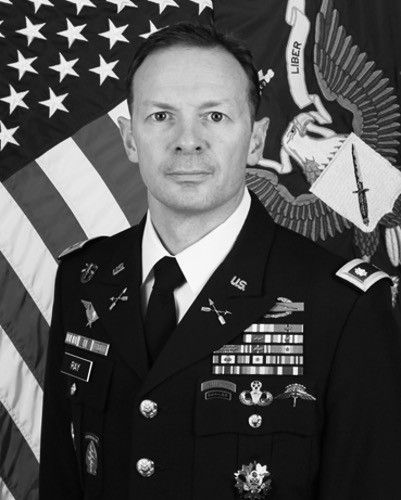
The Human Cost of War: My Own Failure and our Military’s Mental Health Crisis

Our military culture and expectations justifiably require unrelenting standards and there is very little space for human vulnerability, especially in SOF and those in leadership roles. Without changes to our culture and a new approach to mental health, help will remain out of reach for many. I know because I suffered in the dark and when I could no longer maintain the warrior, leader and family expectations, I made poor choices and failed terribly. I hope my story can add to our understanding and help service-members faced with the same issues make better choices and live a better life.

Col. Owen Ray (Ret), Former Special Forces Officer

COL Owen Ray is a recently retired Army Special Forces Officer who led airborne and Special Operations forces for nearly 25 years with multiple deployments in support of Operations Inherent Resolve, Freedom’s Sentinel, Enduring Freedom – Afghanistan and Philippines, Operation Iraqi Freedom and Joint Task Force – INDOPACOM. COL Ray’s last assignment was as the Chief of Staff for I Corps at Joint Base Lewis-McChord.

EXPERT PERSPECTIVE – As I watched our abrupt departure from Afghanistan following the Taliban takeover and marked the 20th Anniversary of 9/11, I felt anger and grief. For many veterans of the last 20 years, it is hard to reconcile the sacrifices without the benefit of victory or even progress. For those who have spent their entire career and most of their adult life at war, the personal cost in terms of mental, physical, and family health is neither well understood nor adequately addressed. 

The recent recognition of the military and veteran suicide crisis by the White House and Department of Defense is a welcome start but we need to change how we approach the problem. Recent CDC suicide statistics showed a 3% decline in the overall US suicide rate in 2020, however military rates continue to rise. The 2021 Department of Defense report on suicides reflects a 41% increase in active-duty suicide rates between 2015 and 2020, killing 580 service members in 2020 alone. Most alarming is a recent assessment by Thomas Howard Suitt with Brown University’s “Costs of War” project, that notes since 9/11, we have lost 7,057 to combat but likely an estimated 30,177 to suicide. The crisis is likely to get worse as the wars close and servicemembers struggle to transition to an unknown and sometimes alien civilian life. Too many continue to suffer in silence, compromised by decades in conflict, failing home fronts, hopelessness, guilt and shame that can accompany a warrior life.

The Fall

On December 26, 2020, I stood on my balcony with a pistol to my head, intending to end my life as police surrounded my house. I had a mental and emotional breakdown that would traumatize my entire family, let my friends, teammates and command down and bring dishonor to myself.

I was married with three wonderful kids, a well-respected member of our small suburban community and a highly successful Special Forces Officer of nearly 25 years. My career was marked with resounding achievement and success – early promotions, selected to command at every tactical level in Special Forces, a graduate degree from Harvard and selected to serve as the Military Aide to President Obama – carrying the nuclear football for more than two years.

Behind the public façade I so ardently protected was a dumpster fire of mental, emotional and physical deterioration and a family struggling. I was suffering complete mental exhaustion from the cumulative impact of untreated mental and physical health issues, operational and career stress across a career in SOF, including eight deployments. I was consumed by the war within and completely unaware of my own deterioration.

In the aftermath of that horrible night, I was devastated, confused and struggled to understand what, why and how this happened. I was criminally charged (and still face trial), vilified by the media and lost my freedom, my career, and worst of all, my family. Months later, and after extensive inpatient treatment, I was diagnosed with severe and chronic Post Traumatic Stress Disorder (PTSD), Depression, Insomnia, and Traumatic Brain Injury (TBI).

I struggled through the years, compensating as so many of us do, by compartmentalizing emotions and numbing with alcohol. Work, mission and deployments provided focus, familiarity, comfort and, ultimately success. Home, however, was unfamiliar. I no longer fit in nor had a role, and seemingly always felt failure. My downward spiral accelerated after returning from an extremely difficult deployment directing the fight against ISIS in 2018. I came home different and the life I returned to changed.

This was the second long deployment in two years after spending a tough year in Afghanistan and my marriage was irreparably damaged. Over the next two years, I would deploy two more times and lost four more Soldiers as well as numerous friends and teammates. I became increasingly depressed, negative, guilt ridden, angry and suicidal. My family suffered equally as they endured this difficult life, my worsening health and my inability to connect emotionally. This is a tragic situation but unfortunately not uncommon.

The Human Cost of the Forever War

I joined Army Special Forces right after 9/11 as a team leader and like many of us, started losing friends and teammates early in the war. Then came regular unit memorials and losses of my own in command. Not just from combat but also from cancer, suicide, and training accidents. Trips to Dover Air Force Base to receive remains, consoling and caring for spouses and children, and attending funerals, took a toll.

Losses extended beyond close friends and included our partner nation forces, civilian casualties and the moral injury that comes from devastating campaigns. As a Green Beret, we train, live and fight alongside our foreign partners, which we watched from a distance as they were abandoned, hunted down and killed if they were not lucky enough to get out of Afghanistan in the final days. These high costs without clear benefit will undoubtedly impact this generation’s veterans and fan the flames of an existing mental health crisis.

PTSD, depression, TBI, chronic pain and physical injury, relationship issues from long absences and substance abuse are hallmark results of enduring wars. Fueled by a culture of unrelenting standards and perfection as well as an overall lack of awareness of mental, emotional and spiritual health, we face continued risks of human deterioration and failure.

A tragic example is the loss of an exceptional Army Officer and friend, COL Scott Green who took his life this past June. A beloved and accomplished leader within Ranger and Airborne forces as well as a husband and father, it was a devastating loss that left many shaken and asking “why”. Accomplishments and career success do not prevent mental compromise. Unless you walked in Scott’s boots, it is hard to understand what he was carrying but I know it became too much and he felt he had nowhere to turn. There are others like Scott out there right now.  As a military and society, we oew them more.

Doing the Same yet Expecting Different Results – Time to Change

As a society, we react to mental health, shifting our finite resources from one crisis to another. We put vast resources toward physical health yet resilience classes or a mental health awareness month are shallow offerings toward proactive mental health. With all my education and training, I could not understand or recognize my own deterioration – I did not have the tools, nor would I have admitted I had a problem. I now routinely visit the behavioral health clinic, which I never stepped foot in throughout my 25 years of service until I hit the wall. The stigma is still there. I feel shame in the room.  There is no eye contact, no talking, no leadership when it’s needed. This is in stark contrast to the physical therapy clinic where focusing on rehabilitating an injury is just a part of getting healthy and improving performance.

The military’s purpose remains to fight and win our nation’s wars but investing in mental health will not lead to reducing combat effectiveness or standards. Personal responsibility and making better choices are the key to making a difference in this crisis but we need to improve mental health awareness and foster a climate and culture where our servicemembers feel they can ask for help.

Reducing shame and hopelessness are critical in this effort to save lives, and we cannot continue to provide a false choice between health and mission or career. This starts with leader vulnerability, authenticity, and compassion. We all are susceptible to relationship issues, substance abuse problems, mental health needs.  It’s time to drop the judgement and show up for someone. A friend showed up for me in my darkest hour and saved my life. Mental health is health and should be prioritized across the military, and if needed, directed by Congress through the National Defense Authorization Act.

We have lost too many of this nation’s best to this conflict and we’re losing more everyday here at home.  We stand to lose many more as the wars close and service members transition to civilian life.

I am now reconciling my life and my accountability but also my responsibility to recover and live better for my family and friends. For some time, I felt I was on a collision course but powerless to stop it. With help and a lot of work, I am learning to walk a better path, but it came at too high of a cost. 

Have an expert perspective to share?  Drop us an email at Editor@thecipherbrief.com

Read more expert-driven national security insights, perspective and analysis in The Cipher Brief

The post The Human Cost of War: My Own Failure and our Military’s Mental Health Crisis appeared first on The Cipher Brief.


from The Cipher Brief https://ift.tt/3D3rWJO
via IFTTT

Thursday, November 18, 2021

How to Avoid Cold War with China

EXPERT PERSPECTIVE — A meeting – albeit virtual – between President Joe Biden and Chinese President Xi Jinping finally happened.  It was a cordial and reportedly candid exchange that hopefully cooled some of the tension between the U.S. and China.

President Biden captured the essence of the meeting with his concern that this tension “does not veer into conflict, whether intended or unintended.”  President Xi said, “China and the U.S. need to increase communications and cooperation” and “respect each other and coexist in peace.”

It’s hard to believe that in 1979, when formal U.S. – China diplomatic relations were established, Chinese President Deng Xiaoping looked to the U.S. as the country that would provide the investment, technology, and unlimited access to our best universities.  And the U.S. didn’t disappoint.  Investment and sophisticated technology flowed to China, with hundreds of thousands of Chinese students enrolling in our universities.  Strategic bilateral cooperation initially contributed to the defeat of the Soviet Union in Afghanistan, with joint efforts to address international terrorism and nuclear proliferation.

So, during the span of forty-two years, relations have gone from close economic and strategic cooperation to a concern about conflict, intended or unintended.  Understandably, scholars will spend considerable time analyzing what went wrong. 

What is important now is that U.S. – China relations move in a more positive direction.  That tension over China’s aggression against Taiwan, the militarization of islands and reefs in the South China Sea, internment camps for Uyghurs in Xinjiang, the national security law in Hong Kong that suppresses democratic protests and the theft of intellectual property all must be candidly discussed by our diplomats and leaders to avoid misunderstanding and accidental conflict.

President Biden said Washington continues to have a “one China” policy and “opposes unilateral efforts to change the status quo.”  President Xi reportedly said, “Beijing will take decisive measures if the pro-Taiwan independence movement crosses a red line.”

The three communiques and the Taiwan Relations Act of 1979 specifically states that, inter alia, “the United States decision to establish diplomatic relations with the People’s Republic of China rests upon the expectation that the future of Taiwan will be determined by peaceful means; to consider any effort to determine the future of Taiwan by other than peaceful means, including by boycotts or embargoes, is a threat to the peace and security of the Western Pacific area and of grave concern to the United States.”

The challenge for the U.S. and China is to address Taiwan and a myriad of other irritants in the bilateral relationship to ensure that no one issue, or series of issues leads to conflict.  Toning down the rhetoric and pursuing a policy of substantive and sustained communications, especially by our diplomats, would be a necessary first step.


The Cipher Brief hosts private briefings with the world’s most experienced national and global security experts.  Become a member today.


The annual Economic and Strategic Dialogue with China, led by the heads of State Department and Treasury and their counterparts in Beijing was established to oversee progress in addressing these and other challenging issues.  A forum of this type, with announcements to ensure that the public is kept apprised of the issues and the work being done to resolve these issues, is of value, only if this dialogue is substantive and not just ceremonial.

This virtual presidential summit can be transformative if, in addition to addressing these and other irritants, it also addresses the opportunity to cooperate on a multitude of geopolitical issues that affect the security of the U.S. and China – and the world.

I’ll start with the nuclear issue and the fact that there’s minimal dialogue with China on its nuclear program.  And given recent reporting on the three sites in China with the construction of hundreds of missile silos and the recent DIA report that China, by 2030, will have a nuclear arsenal of 1000 nuclear warheads is of concern.  Ideally, China should be part of New Start arms control negotiations with the U.S. and Russia.  But they previously refused to join in this or any other arms control dialogue.  At a minimum, China should be responsive to a dialogue with the U.S. on nuclear-related issues, to include their recent test of two hypersonic missiles.

A separate but equally important dialogue with China is on cyber, to ensure that the cyber domain is not weaponized and used against our private sector for economic advantage.  Also, to ensure that outer space is used exclusively for peaceful purposes.

There are a multitude of global issues requiring bilateral cooperation.  We recently saw some U.S. – China cooperation on climate change at the Glasgow COPS 26 UN Climate Change Conference.  Obviously, more must be done, but this is a positive first step.

Other issues, like North Korea can and should be addressed now.  China has unique leverage with a North Korea that relies on China for its economic survival.  China can use that leverage to get North Korea to return to negotiations and to convince the North that complete and verifiable denuclearization, in return for significant deliverables, is in North Korea’s interest.

With over five million global casualties and over 760,000 deaths in the U.S. due to COVID-19, it should be obvious that greater bilateral cooperation on this and future pandemics is necessary.


Go beyond the headlines with expert perspectives on today’s news with The Cipher Brief’s Daily Open-Source Podcast.  Listen here or wherever you listen to podcasts.


Bilateral cooperation on nuclear proliferation, countering international terrorism, the trafficking of narcotics and confronting international organized crime are just some of the global issues that affect the security of the U.S. and China and the global community.  Failure to cooperate on these and other international issues is not only a security imperative, but a moral responsibility of all great powers.

Finally, with the Taliban back in control in Afghanistan, the U.S. and China have a shared goal: ensuring that the Taliban does not permit Al Qaeda and other terrorist organizations to once again use Afghanistan as a base for its international terrorist operations. China has engaged this Taliban government and should use its significant financial leverage to ensure that all terrorist groups are permanently removed from Afghanistan.

Xi Jinping was just anointed by the Chinese Communist Party as one of its revered leaders, with Mao Zedong and Deng Xiaoping.  The Party congress next year will likely give Xi a third five-year term as the Party’s Secretary General.  There are a multitude of domestic issues requiring Xi’s and the Party’s attention, to include a campaign of “common prosperity” – addressing the disparity of wealth in a China governed by a capitalist system with Chinese characteristics.

Hopefully, President Xi Jinping will work with President Joe Biden to ensure that the two great powers, consumed with domestic issues, will also address the myriad of international issues requiring immediate and long-term attention and avoid a cold war that could veer into conflict.

Read more expert-driven national security insights, perspective and analysis in The Cipher Brief

The post How to Avoid Cold War with China appeared first on The Cipher Brief.


from The Cipher Brief https://ift.tt/3Cr7OB3
via IFTTT

Monday, November 15, 2021

What Stands Between the Taliban and Recognition

This piece was first published by RUSI in London.  The views do not represent those of RUSI.

EXPERT PERSPECTIVE –The international community is coming under increasing pressure to recognise the Taliban and to unfreeze Afghan funds held by the IMF or to risk a humanitarian crisis over the winter and a resurgence of international terrorism.

As Afghanistan heads deeper into winter the desperate need is to avoid a humanitarian crisis. The World Food Programme has launched an appeal to feed up to 23 million people and Médecins sans Frontières have followed suit in the healthcare field. Fortunately, the distribution mechanisms are in place inside Afghanistan; what is needed is for the international community to ensure that UN humanitarian programmes are fully funded. This will require Western capitals to get over the shock of their recent defeat. It goes without saying that hunger and health should not be used as instruments of political leverage.

Meanwhile, it is becoming ever more apparent that the Taliban do not have the skills to administer a country which is far more complex than the Afghanistan of 1996 – when they began their previous and disastrous spell in office. They will need international assistance to stabilise the economy, get people back to work and, in time, continue the gradual infrastructure improvements which have been underway since 2002. China will doubtless be willing to assist in some areas but Beijing has already made clear that it is adopting a cautious, gradualist approach. However, there are emerging indications that the Taliban’s intransigent views are beginning to relax; such as their approval of the polio vaccination scheme and their willingness to work with UN humanitarian agencies.

The Taliban will also need outside help in defeating the threat from the Islamic State’s Khorasan Province (ISK). Already the Taliban are finding it difficult to counter similar asymmetric tactics which they used so successfully against Western forces. This is likely one of the subjects which CIA Director William Burns discussed with the Taliban during his visit on 24 August and where there is a mutual interest.

What can the international community (not just the West) realistically expect from the Taliban, following the militant group’s stunning victory? Maximalist demands will inevitably get short shrift.


The Cipher Brief hosts private briefings with the world’s most experienced national and global security experts.  Become a member today.


First, the Taliban should form a more inclusive government. According to multiple sources, the Taliban were intending to form such an administration had Ashraf Ghani not fled the country on 15 August. I am sceptical that this was ever their intention but former president Hamid Karzai and former reconciliation chief Abdullah Abdullah may have remained in Kabul on this understanding and Fatima Gailani, a former negotiator, insists this was the Taliban’s intention.

An inclusive government would need to include women and non-Taliban representatives from the Hazara, Uzbek and Tajik communities. It need not comprise the failed politicians and bloodstained warlords of the past, least of all Gulbuddin Hekmatyar and Abdul Rashid Dostum. It is surely time for a new generation of more technocratic Afghans to become involved in government. Some may be persuaded to return from abroad but they will need assurances for their safety.

Second, the international community should insist on female education at all levels be restored and for women to play a fuller role in society. The Taliban will baulk at this but they only need to look at Pakistan where women play an important role in an avowedly Islamic, if not Islamist, society.

Third, all neighbouring countries, as well as the wider world, want Afghanistan to commit to removing all terrorist bases and terrorists from its soil; not just ISK and Al-Qa’ida but also the Eastern Turkistan Islamic Movement, the Pakistani Taliban (TTP), anti-Iranian and anti-Indian groups, and Central Asian militant movements including the Islamic Movement of Uzbekistan.

Fourth, the Taliban should commit to allow people to join their families in exile if they wish and also cease the continuing search for and punishment of those Afghans who served the Afghan government and Western allies since 2001.


Go beyond the headlines with expert perspectives on today’s news with The Cipher Brief’s Daily Open-Source Podcast.  Listen here or wherever you listen to podcasts.


In an ideal world there would also be a fifth request: to remove Haqqani network members from the Taliban administration. However, that pass was sold when the US negotiator Zalmay Khalilzad engaged with the Haqqanis in Doha – another result of that calamitous dialogue. Furthermore, the current reality is that the Haqqanis control both Kabul and its airport and Sirajuddin Haqqani holds the key position of interior minister.

Instead, the Haqqanis need to be persuaded to prevent Al-Qa’ida regrouping in Afghanistan. Sirajuddin’s father was close to Osama bin Laden and the group retains its Al-Qa’ida connections. Pakistan is already using the Haqqanis to bring the TTP to the negotiating table. It remains to be seen how successful this will be. It is doubtful that the Haqqanis would be willing to take military action against a group from a similar area in the tribal borderlands. However, the Haqqanis could be useful as intermediaries, if not as enforcers.

Meanwhile, the wider Taliban, usually referred to as the ‘Kandaharis’, are increasingly exasperated by the entryist Haqqanis. Although they have worked together, there was never much love lost between the two. The Kandaharis have always distrusted the Haqqanis’ proximity to the Pakistani military. Since the Taliban takeover of Afghanistan, Mullah Abdul-Ghani Baradar, whose willingness to negotiate with the Kabul government in 2008 and 2010 earned him eight years in a Pakistani prison, has been sidelined. There will doubtless be a reckoning

A lasting regret of the US’s careless withdrawal is that Washington did not conclude a broader settlement for Afghanistan involving China, Iran, Russia, India and the Central Asian Republics. From now on it is essential to include all the neighbours in the discussion of recognition and the conditions required. But first the Afghans must be helped to survive the winter.

Read more expert-driven national security insights, perspective and analysis in The Cipher Brief

The post What Stands Between the Taliban and Recognition appeared first on The Cipher Brief.


from The Cipher Brief https://ift.tt/3wKeuZW
via IFTTT

https://pieces-auto-maroc1.blogspot.com/

 https://pieces-auto-maroc1.blogspot.com/